
TLDR: Instead of automatically shutting down disrespectful communication; when we respond to it as unpolished communication attempts, we are more effective in our parenting long game.
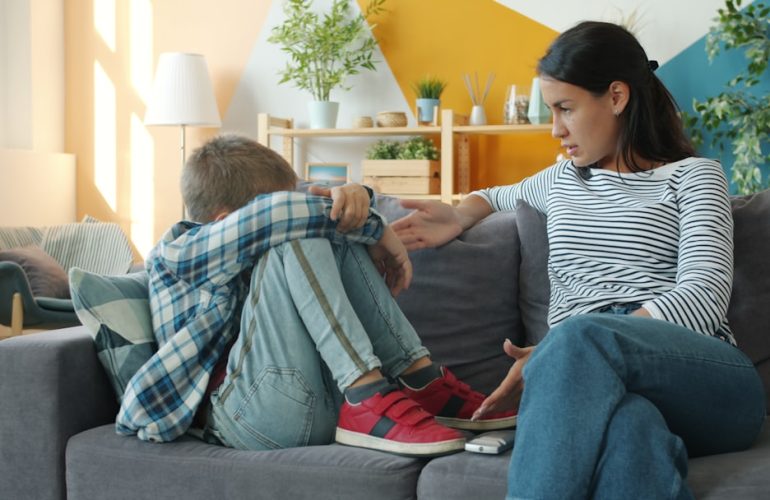
Many parents bemoan the disrespectful interactions that they have with their children and teens. They recognize that ‘they would never have spoken to their parents this way.’ And then feel upset, guilty and like they are dropping the ball, if they don’t intervene to shut it down. When these efforts are met with escalation it feels natural to respond with additional intensity and punishment. And so begins the dance of escalation and disrespect.
It IS a different world then the one in which many of us were raised. We value connection with our children as a core value. We also see the complicated society where they will come of age, and are aware how critical is self advocacy, assertive communication skills and emotional maturity.
Of course this gets tricky.
Conventional thinking around parenting expects a certain amount of respect and deference from our kids. In the same breath, want them to know their worth, stand up for what they need and what is right, and self advocate. We are unlikely to want to use fear and threats to purse our parenting goals. And when we to do, out of reflex or desperation, it becomes clear that our momentary sense of power is an illusion and our actual influence/relationship is diminished.
Relationships at home and within families are the crucible where skills can be practiced with far less risk when they miss the mark. And miss the mark they will.
I often hear from parents concerned that their children are communicating with them disrespectfully. And I see it; they are. Yet in our attempt to swiftly shut down the ‘misbehavior,’ the opportunity for connection and assertive communication practice; is lost. What is left is disconnection or escalation.
Some kids, when scolded for their bad attitudes, back talk, eye rolls, etc; can step away and take it down a notch before they return to try again. Impressive if that is really what is happening. Sometimes though it less about authentic communication and connection and more about them managing their parents. Some notice that their parents get ‘triggered’ and chose to work around them rather than deeply communicate. They may appear more respectful but respect may not be what they are actually feeling or doing. Yikes.
In family sessions this sometimes looks like a quick glance from a teen that says, you’re seeing this, right?
When parents manage their emotions, kids can safely practice and grow skills
Even when kids are struggling with theirs.
Especially when kids are struggling with theirs.
Kids need parents to parent and grown-ups to grow-up.
Our kids are learning the emotional intelligence skills that are being explicitly taught in schools and yes, on social media. Some so well that they recognize when parents have lost the plot. We want, (and they need) us to be ‘relevant’ to them so they can honestly communicate with us. Within our relationships are priceless opportunities for safe attachment, a sturdy home base and perhaps counter intuitively; our most legitimate opportunity to have influence on their choices.
Our kids are kids and desperately need us to rise to the occasion to help them grow these skills. Maybe you are still working on these skills. Many of us are. We will also get it wrong. Thats’s fine, and even useful, as long as we are self aware and willing to learn. When we get it wrong we can model valuable skills in apologizing, repairing a rupture and responding vs reacting.
Family is the ideal place to practice these not so intuitive skills.
If not there then where?
Parents get tripped up when they react to their kids unpolished attempts at communication, aka disrespect, with their own dysregulated emotional reaction.
Kid’s intensity is naturally upsetting to parents. Some amount of this is healthy and makes sense. We should pay more attention to what they need in these moments. They are trying hard to communicate. It is challenging when our own, very natural stress response, accidentally lead us to flawed conclusions.
A. Disrespect or misbehavior – when these are primary lenses of understanding the behavior; it feels important to shut it down and ‘correct the problem.’ The escalation that results feels like a foregone conclusion and options feel limited.
B. Emotionality or dysregulation – when your kids are upset or rude it feels upsetting. It is evolutionarily wired for parent’s attention to be sparked when your child expresses a need. Noticing their intensity is wise. Where this can become troublesome is when the parent ‘catches’ the intensity of the emotion and also become escalated and/or reacts as if it is a bad thing that must be urgently solved or soothed.
If we follow our natural reaction, without thoughtful leadership; we are compelled to fix it, correct it, sooth it, silver line it, punish it, lecture or otherwise shut it down
The common theme here is that their upset is upsetting us and we feel a need to DO something. And it is true, we do want them to do it differently. It is the directness of our pursuit that accidentally hurts our cause.
Leadership and sturdy parenting are noticing and tuning into the intensity while holding onto our own inner calm, (so hard) in order to stay present and stable. From here you are more able to choose what is needed, rather that what may feel intuitively right in the moment but actually is less helpful
The ability to choose your response sounds simple but it is not easy.
The good news
Remember that these moments are opportunities to practice tough communication skills. You DO NOT NEED to fix their emotional state. Knowing this frees you up to stay regulated and sturdy.
You guide them out of the mud when you haven’t jumped in too.
Many parents think they need a magical response or action to solve the ‘problem’ that is in front of them. That is not your task. It is fools gold and a misunderstanding of the mission. It is clear that we have charged ahead of ourself when our ‘best’ efforts are met with extra push back, escalation, disengagement or a sense that our kids are managing us. And yes, this is additionally distressing and adds momentum to the loop of escalation.
This is not a, you aren’t trying hard enough situation.
You are probably trying too hard. You don’t need to fix or solve anything, at least not yet.
When you let that go of the idea that this is ‘dangerous’ and you must ‘discipline or fix it,’ (or uncomfortable and you must solve it;) you remove pressure from yourself and are more likely to stay calm and effectively present. The goal is to communicate, directly and indirectly; that you are there, trust their ability to work things out and can handle their big feelings without getting blown sideways.
This is the definition of a sturdy parent.
Sometimes they do need more support
Thing is, you are FAR better positioned to truly understand the actual problem (hint, it is not always the apparent problem) and then discern more accurately if/when and how to support them.
Sometimes it is ‘not that deep’
Some amount of venting, grumbling and complaining is common. This means that they don’t need and won’t appreciate; solutions, problem solving or silver lining from you. If you hang in for a few minutes, it usually becomes abundantly clear if they ‘need’ you to do something. If you are still unsure it is fair to ask. Meanwhile, by hanging in the conversation with validation and gentle curiosity, while conveying that you can handle their intensity, you are giving the gift of your supportive relationship. Excessive or continual grumbling that feels different is worth inquiring about but every instance probably does not signal an emergency.
This is co-regulation
It has the side effect (not the goal!) of helping them return to calm. Not because someone told them to do their breathing exercises but because space was held for them to talk through what was distressing.
Looks like
I am a therapist but this tends to not look stereotypically ‘therapisty.’ Most of us can agree that being ‘therapitized’ to by your friend or parent is universally annoying. We are also undoing the stressful idea that we ‘should’ have some perfectly worded nugget of wisdom that will solve the ‘bad’ feeling. That is a lot of unnecessary pressure and extra anxiety.
Any variation of ‘you should just…’ is a cue that what follows is unlikely to be helpful or appreciated.
Especially with teens, please don’t take too much too personally and do response accordingly
So if they are rude, dismissive, defensive or argumentative, yes they are irritated. Maybe it’s you maybe it’s not. It’s probably not really you unless you are being predictably annoying. I know I am being predictably annoying when I ask 20 questions right when I pick my teen up from somewhere. If so, gather your self awareness, brush off your ego, apologize and give them space and quiet, even if they were asking for it a bit harshly.
I want soo much to hear about their day and am FAR more likely to get beyond ‘fine’ when I am respectful and honor their pacing.
Respect – ahh, respect
This little word can mean vastly different things to different people; or to the same people in different moments.
When we are feeling powerless/hopeless, respect can be a battle cry that old school parenting loves to answer.
This is the respect that is fear, control and deference. It is one directional, demanded, upheld by fear/threats and not a place where relationship grows.
The respect that most parents seek is still powerful. It is powerful in that it is freely given, mutual and rooted in relationship. It is powerful not in its absolute control but instead in its offer of real influence. It goes both directions and can be expected but not demanded. Though expected it is still freely given. Picture your favorite teacher.
This does NOT mean that a parent can’t or shouldn’t have a clear leadership role in the family. Sturdy leadership remains vital. Parents are respected as leaders in their family when they effectively manage their emotions with maturity, set boundaries and expectations clearly and kindly, communicate effectively with self awareness/assertiveness and are dependable. The respect that parents communicate to their children acknowledges that kids are separate, real and full humans. Humans with their own wants, needs and sense of the world. They seek to understand their children’s perspective as important and collaborate when possible. Holding onto these ideas goes a long way.
Dancing metaphor
There is an expected and time honored choreography to the dance of relationship. When one moves, the other does too; in a predictable way. A ‘disrespectful’ kid can push a button that begins an old an unhelpful patterned dance. It seems inevitable but you can change your moves! Mix them up. See what happens. The pattern shifts when you dance differently.
Your main goal, and I can’t emphasize this enough, cannot be to force them use different moves. Instead do something different yourself. It is only natural that they will too. And then they ARE doing something different.
It is respectful (and true) to assume that they also don’t love the crappy dance of disrespect. They would do it differently if they could. They just can’t yet be the one to change the choreography. They are the kids in this scenario. My 15 year old is, half joking but also not, making a growl face at me at the moment. He is saying with this face ‘I’m not picking up what you are putting down.’ When I don’t take it personally and remain light in the moment; he comes back around. Usually moments later but at least later that day.
If I joined in his rude dance by responding in kind, harshly correcting him or snatching his device, we would have an entirely different interaction. I am also generously and genuinely assuming that he is, as a barely 15 year old who recently started high school; a great kid who will be just fine. (instead of a horribly disrespectfully person who growls at authority figures and is headed for destruction) The distinction is important because I am reminded that this is not a problem I need to aggressively pursue and my best course of action is to remain steady and connected.
So I don’t feel the need to DO anything to shut it down. I hold steady in my dance moves with patience, respect and love.
I encourage you to ignore and if needed (because of the frequency, intensity or escalation) circle back, to many typical kids/teen expressions of disagreement or frustration. I’m talking about the eye-rolls, huffs, scoffs, grumbles, stomps, ‘fines,’ ‘whatevers’ and even door slams. You are wise to name the emotion (this is a skill you are teaching) and honor their lack of escalation or even positive follow through.
“I know you didn’t want to go to practice tonight and felt really frustrated. I appreciate that you kept your commitment and went.”
“I realize you hate taking up the trash. I appreciate that you got it up there on time.”
If your teen is approaching you with egregious disrespect. These are the screaming in your face, cursing at you, mean name calling, threats, or ongoing escalation. They are escalated and in an odd way their emotion, when reflected in your own reactive escalation, is a sort of validation. This is that indescribable, itching for a fight feeling, that many of us can probably relate to. Though your response may vary based on the actual needs of the situation and actual danger that may be present, one possible response is as follows.
Again and always, you are trying to be (and if not be then LOOK,) as calm and sturdy as possible. Your initial response can carry more volume and force than your typical voice. “Hey! I see that you are pissed. Like really fucking pissed” (or what fits for your family)
(slightly softer) “…I’m sure you have a good reason” “What’s going on?”
You are not dysregulated yourself but are initially mirroring a similar level of intensity. This is not an invitation to a screaming match. It will likely get their attention. Especially if you don’t typically hurl F-bombs around. You are actually validating their emotions thought without the typical dance of getting sucked into trying to punish them or otherwise escalate. Maybe they will settled a few notches and can better express what they are so upset about. Maybe not yet. If not, and it feels verbally abusive, you can excuse yourself, or invite them to excuse themselves, go shoot a few hoops or something and then reconvene.
Do reconvene
They are upset about something and it is obviously something that really matters to them. If they calm down enough and are telling you what all is upsetting to them, (even if it is still a somewhat disrespectful rant,) try and hear them out. I’m not advocating for staying and being verbally abused.
“Hey, I see can see that this is really important to you and I want to understand. It is hard for me to listen when I’m being screamed at. I can hang in with anger just not verbal abuse.” Only say something like this if it is true and you can say it without sarcasm. Practice if you need to. Sarcasm is thinly veiled contempt and they will hear it as such.
Circling back – aka – Striking when the Iron is Cold
“Hey, I know you were incredibly frustrated earlier today. I very much want to hear you out. And calling me names and cursing at me felt uncool and hurtful.”
Such a statement is factual, non shaming and leaves room for a true apology and repair. These are incredibly important human skills. There are plenty of adults who do not consistently have these skills and they struggle because of it. Though such moments are clearly no fun, there is still plenty of learning and growth.
If not with you then who?
I have witnessed more than a few kids and teens go off on pretty intense rants at their parents during a family session. The dance was already different because of the setting and my presence. Several things I notice.
First, the conversations, though escalated, remained within a tolerable (barely) level. I’m not sure that most parents would have hung in such a ‘disrespectful’ conversation in typical scenario. More of conversation was directed toward me though about the parents or some home situation. I am staying present, validating, seeking to understand and working to co-regulate. The child or teen undoubtable shares some extremely important pieces of information about their concerns, experience and understanding (misunderstanding) of the situation. And they eventually begin to calm back down. Partly because I am vigilantly working to understand and clarify their experience and likely once they feel heard and understood; the need to keep aggressively make their point, is no longer necessary.
We (the parents and I) almost always end up gathering extremely important new information that is buried in their anger and complaints. If we didn’t take the time to fully and deeply hear them out, and instead led with correcting their ‘disrespect,’ we would have missed what they really needed us to know.
My observation is that many kids will keep up with this disrespectful communication until they are heard. Some escalate so quickly because historically they have been shut down and punished for their outburst and are expecting the same. We can all imagine how frustrating it would be if we had something really important to share but because we didn’t yet have the skills to talk about it calmly, and were quickly shut down and punished when we tried.
Of course we don’t want our kids to go out into the world hurling curses when they don’t get what they want. Growing better communication skills does make sense. The road to growing the communication, self regulation, flexible thinking, perspective taking and emotional maturity requires practice. Just like so many things, this is an issue of skill not will.
It stands that punishing this behavior does not create space for learning
In old school parenting, perhaps sufficient raw fear could shut it down. This gives the illusion of solving the problem and an effective parent. But do not mistake shutting it down in that moment due to fear, for actual learning. Think back to your own thoughts as a kid when you were harshly punished for something.
True learning requires time, compassion and messy practice.
Repair – make a mistake and clean it up
Teach your kids to make real apologies and repairs. You model this when you apologize and make repairs, to them and others around you. Repair can also be encourage though is different than forcing an apology. Kids grow this skill when we create safety, identify their positive intent to make it right and avoid overwhelming them with shame.
This is not permissive parenting though it can represent a huge paradigm shift. For many parents today, this was not how we were raised. Changing the conversation and breaking the cycle can be counter intuitive and just plain hard. It is also worth it.
You got this.